Why Water Damage Is More Than a Structural Problem
Water damage is often viewed as a structural issue that affects floors, walls, or ceilings. While these visible problems certainly require attention, the hidden effects of water damage can be just as concerning. Moisture that remains trapped inside a home has the potential to affect indoor air quality, weaken building materials, and create conditions that become increasingly difficult to correct over time. Whether the damage is caused by a plumbing leak, a severe storm, or an overflowing appliance, responding quickly is one of the most effective ways to protect both your property and the environment inside your home.
For homeowners in Little Rock, Arkansas, water damage is not uncommon. Seasonal storms, heavy rainfall, aging plumbing systems, and unexpected appliance failures can introduce moisture into areas that are difficult to inspect without professional equipment. Even when surfaces appear dry, water may still be hidden behind walls, beneath flooring, or inside ceilings. This is why every water damage incident should be treated as more than a cosmetic issue. Taking the proper restoration steps early can prevent more extensive repairs while helping maintain a healthier indoor environment.
Water Damage Doesn’t Always Stay Where It Starts
One of the biggest challenges with water damage is that it rarely remains confined to the location where it first appears. Water naturally follows the path of least resistance, allowing it to spread through wall cavities, beneath flooring materials, and into structural framing. A small leak under a kitchen sink can eventually affect adjacent rooms, while a roof leak may travel through insulation before becoming visible on a ceiling several feet away from the original source.
Because moisture often spreads unnoticed, homeowners may assume the problem has been resolved once standing water has been cleaned up. Unfortunately, hidden moisture can continue affecting the property long after visible signs disappear. Over time, damp materials may begin to deteriorate, reducing their strength and increasing the cost of future repairs.
Understanding how water moves through a building helps explain why professional restoration focuses on much more than simply removing visible water. Every stage of the recovery process is designed to identify, remove, and manage moisture before it causes additional damage.
Why a Water Damage Inspection Is the First Step Toward Recovery
Before restoration begins, professionals need to understand exactly how far the damage has spread. This is where a comprehensive Water Damage Inspection becomes essential.
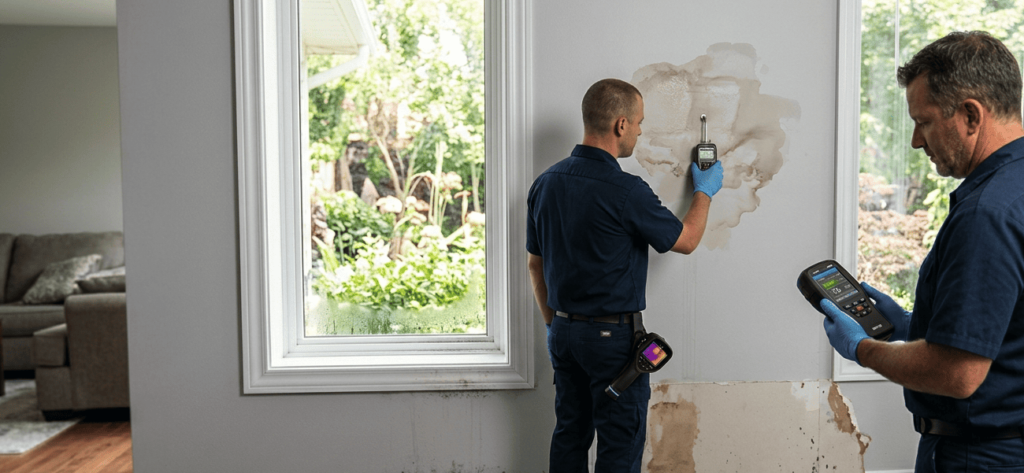
Unlike a visual inspection performed by a homeowner, a professional assessment uses moisture meters and thermal imaging technology to identify water that may be hidden inside walls, under flooring, or above ceilings. These tools allow restoration specialists to locate areas that would otherwise remain undetected until more serious problems develop.
A detailed inspection also helps determine which materials can be restored and which may require replacement. Instead of relying on guesswork, technicians create a restoration plan based on accurate moisture readings throughout the property. This approach not only improves the efficiency of the restoration process but also helps reduce unnecessary demolition.
For homeowners, scheduling an inspection immediately after discovering water damage provides valuable peace of mind. Knowing the full extent of the damage makes it easier to take the appropriate next steps before hidden moisture creates additional complications.
Removing Standing Water Quickly Makes a Significant Difference
Once the inspection is complete, the next priority is eliminating standing water from the affected areas. Water that remains inside a property continues to soak into flooring, drywall, cabinetry, and structural materials with every passing hour. The longer this moisture remains, the greater the chance of permanent damage.
Professional Water Extraction uses commercial-grade pumps and extraction equipment capable of removing large amounts of water far more efficiently than household tools. These systems are designed to remove moisture from carpets, flooring, crawlspaces, and other areas where water commonly accumulates after leaks or flooding.
Fast extraction not only helps protect building materials but also shortens the overall restoration timeline. By reducing the amount of water that can be absorbed into surrounding surfaces, property owners often experience fewer repairs and a smoother recovery process.
Although many homeowners attempt to remove water themselves, professional equipment reaches areas that conventional wet vacuums simply cannot. This is especially important when water has spread beneath flooring or into difficult-to-access spaces where moisture can remain hidden.
Drying a Property Requires More Than Opening Windows
After standing water has been removed, many people believe the home will naturally dry on its own. While ventilation certainly helps, it is rarely enough to eliminate the moisture trapped deep within building materials.
Professional Structural Drying and Dehumidification is a controlled process that removes excess moisture from wood framing, drywall, insulation, subfloors, and other structural components. Industrial air movers increase airflow while commercial dehumidifiers continuously remove moisture from the air, creating conditions that allow building materials to dry evenly and safely.
This stage of restoration is often the longest, but it is also one of the most important. Skipping or rushing the drying process can leave moisture hidden inside the structure, where it may continue causing damage long after surfaces appear dry.
For homes in humid climates like Arkansas, proper dehumidification is particularly valuable because elevated humidity levels can slow natural drying and allow moisture to linger much longer than expected.
Leave a Reply